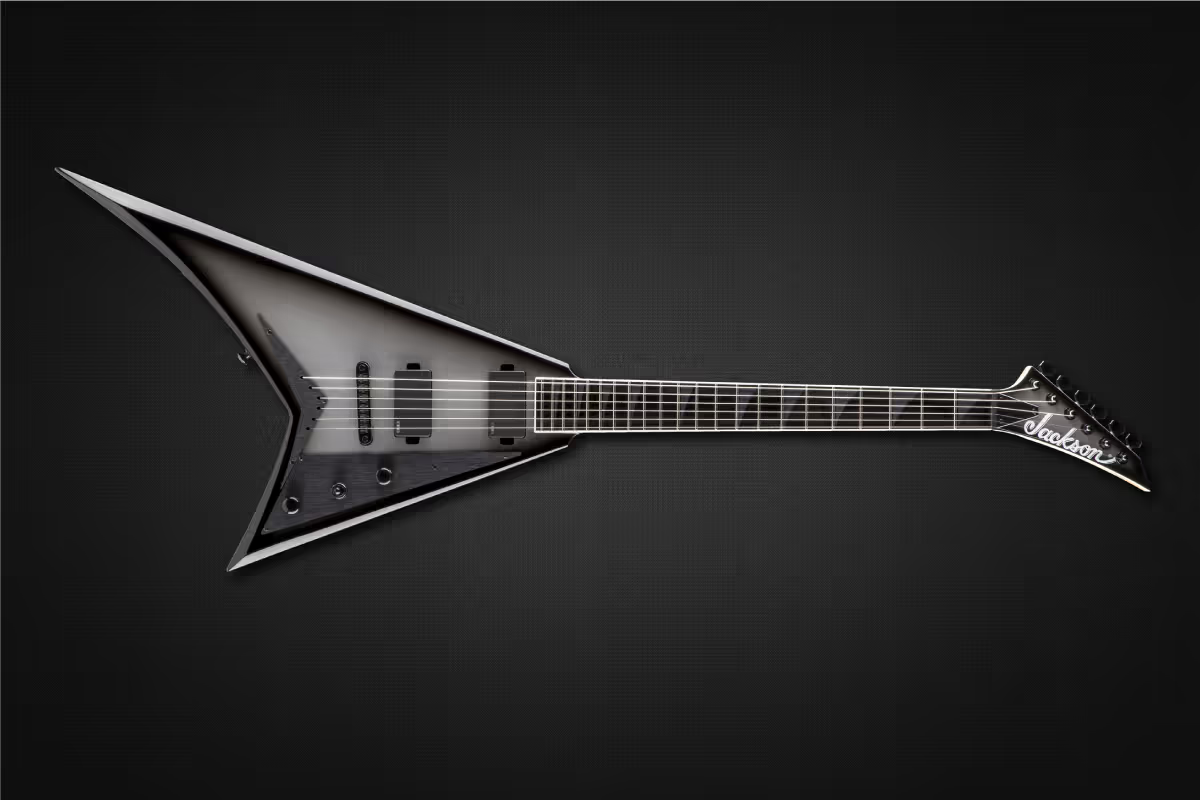
Most guitars marketed at metal players are bad value. The pickups are loud and undefined. The wood is whatever was cheap that month. The finish is the part the marketing team cared about. The instrument exists to be photographed in a guitar magazine ad and forgotten by its owner within a year.
The Jackson RR Pro is the exception. We've run draws on five different metal-leaning guitars over the past two years, and the RR Pro is the only one we've gone back to. This article is the case for why.
The shape isn't the point
The V-body silhouette is the first thing people see and the last thing that matters. Randy Rhoads' original design was about access, weight balance, and stage presence. None of those are properties you can evaluate by looking at a photograph. They're properties you can only evaluate by playing the instrument for an hour.
The RR Pro's V geometry is the result of forty years of incremental refinement. The lower wing has more mass than vintage RR designs to keep the neck from diving. The upper horn is angled to clear the player's forearm during higher-fret work. The strap button placement compensates for the off-center balance point. None of this is glamorous. All of it matters.
What the spec sheet looks like
Neck-through alder body with maple neck and ebony fretboard. Compound-radius fretboard — flatter as you climb. Twenty-four jumbo stainless-steel frets. EMG 81/85 active humbuckers. Floyd Rose Original double-locking trem. Black satin finish. Original hardshell case included.
The two specs that matter most for the playing experience: the compound radius (fast in upper positions, comfortable for chording in the lower) and the Floyd Rose Original (the same hardware Jackson uses on its USA Custom Shop builds, set up correctly from the factory).
The setup is the difference
The reason most Floyd Rose-equipped guitars have a bad reputation isn't the hardware. It's that the hardware ships with a generic factory setup that almost never matches a real player's preferences for action, intonation, and string tension. The RR Pro is no different at the factory.
The unit in our draw has been set up by our luthier. String height, intonation, trem float angle, pickup height — all dialed for working players. We've run the trem through a dive-bomb-and-pull-up cycle a hundred times and it returns to pitch every time. If the unit ships to a winner who wants different action, it's a five-minute adjustment.
Where it sits in the lineup
The RR Pro is the middle child of the Jackson V-body family. The X Series is below it (cheaper materials, less attention to setup). The USA Custom Shop is above it (four-month wait, three to five thousand dollars). The Pro is the only point in the lineup where you get the full Jackson spec sheet without the wait time and without paying for the nameplate twice.
What we'd note for collectors
This isn't a vintage instrument. It's a current-production guitar with current-production market value. The collector angle: matte-finish RR Pros tend to hold value better than gloss, the EMG variant outperforms the passive-pickup alternates on the resale market, and Jackson cycles the spec frequently enough that this exact configuration won't be available indefinitely. None of that matters if you're entering to play. All of it matters if you're entering with an eye on five years out.
One pattern we've noticed
The RR Pro draw closes faster than any other metal-leaning instrument we've ever listed. Not because we structure the entries differently. Because the player base for this kind of guitar moves quickly when something serious shows up.
The active draw
The Jackson RR Pro is currently featured in an active Great Guitar Giveaway draw. Entry mechanics, current pool size, and close date are listed on the draw page. No-purchase-necessary entry is available on every draw.